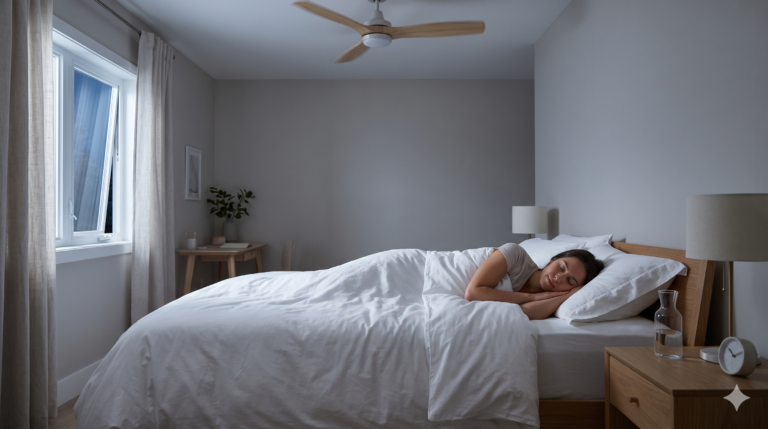
Sleeping in Clothes vs Naked: What Works for Hot Sleepers
Your body takes your pajamas off for a reason — and it’s not sleepwalking.
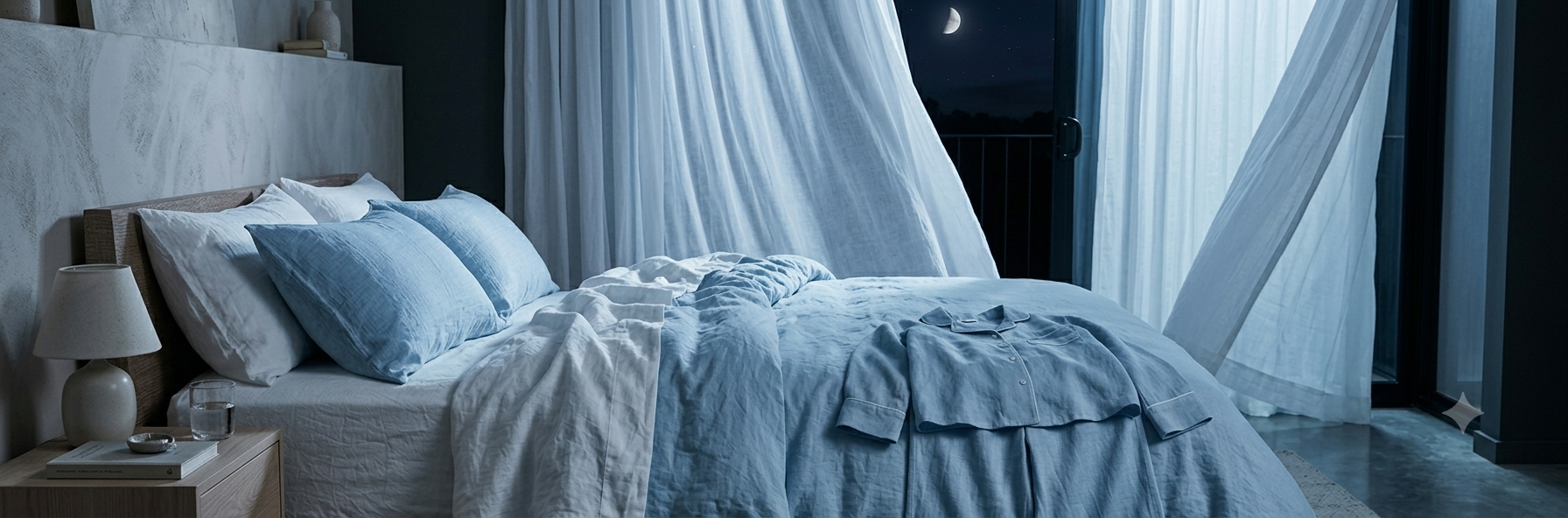
Every hot sleeper gets to this question eventually: would I sleep cooler if I just slept naked?
It sounds logical. Less fabric = less heat. But the reality is more complicated — and the communities that obsess over this stuff (r/sleep, r/Bedding, r/insomnia) have stress-tested both sides of this for years.
The short version: naked isn’t automatically better, and the wrong pajamas are definitely worse. What actually matters is the fabric.
What Your Body Is Actually Trying to Do at Night
Your body needs to cool down to fall asleep. Core body temperature drops roughly 1–2°F in the first hour of sleep. That drop is what triggers the biological “sleep signal.” Block it — with the wrong bedding, the wrong room temperature, or the wrong fabric — and you’ll lie awake wondering why you can’t switch off.
So where does clothing fit in?
The Case for Sleeping Naked (And Its Real Limitation)
Sleeping naked removes one layer of insulation. In theory, heat dissipates faster from the skin surface. In a cool room (below 67°F / 19°C) with breathable sheets, that logic holds.
But here’s the problem: bare skin against sheets creates a sealed microclimate. Your body sweats, there’s nothing to wick it away, and you end up lying in a warm, damp patch. Many hot sleepers who try naked report waking up sweatier — not less.
“I can sleep naked with a fan blasting and a thin blanket and still wake up in a pool of my own sweat.”
— one hot sleeper, r/Bedding
Naked works when your sheets are doing the wicking. If they’re not — if you have polyester, microfiber, or high thread-count sateen — naked just means sweat pools faster.
The Case for Sleeping in Clothes (With the Right Fabric)
A lightweight, breathable fabric layer between your skin and the sheet helps in two ways:
- Moisture wicking — the fabric pulls sweat away from skin and spreads it for evaporation, rather than letting it pool
- Microclimate buffer — the right fabric maintains the optimal skin-level temperature without trapping heat above it
The operative word is right. Polyester pajamas are essentially a plastic bag. Flannel is a winter insulator. Fleece is a heat trap. But linen, Tencel, or lightweight percale cotton? These breathe, wick, and help your body regulate all night.
Fabric Hierarchy: What Actually Works for Hot Sleepers
✅ Best: Linen
Linen is the top choice. It wicks moisture faster than cotton and dries more quickly, stays cool to the touch, and — unusually — becomes softer the more you wash it. The rough texture is a real trade-off that gets better over time. Look for 100% European or Belgian flax linen; linen blends often contain polyester. Linen sheets pair well with linen pajamas — they’re the same logic applied to two surfaces at once. See our cooling sheets guide for linen sheet picks.
✅ Great: Tencel / Lyocell
Tencel is made from eucalyptus wood pulp. It’s silky, temperature-regulating, and meaningfully cooler than cotton. If linen texture bothers you, Tencel is the go-to alternative — and it’s more widely available in sleepwear.
✅ Good: Lightweight Percale Cotton
100% percale cotton at under 200 thread count breathes and wicks adequately. The mistake hot sleepers make is buying heavy cotton or high thread-count cotton — dense weaves trap heat. Percale’s crisp, open weave is what separates it from sateen.
⚠️ Use Carefully: Bamboo Viscose
Bamboo gets marketed hard to hot sleepers. But bamboo viscose — the most common form — loses most of its natural properties in chemical processing. It’s better than polyester, not better than linen or Tencel. Bamboo lyocell is a cleaner process and performs better, but it’s harder to find in sleepwear.
❌ Avoid: Polyester, Microfiber, Fleece, Flannel
None of these breathe. Polyester and microfiber trap heat against the body. Fleece and flannel are thermal fabrics — designed to retain warmth. If you’re in any of these and wondering why nothing is working, start here.
Does Sleeping in Clothes Ruin Them?
Short answer: not significantly — but there are caveats.
Wearing the same clothes you wore during the day to bed is a different matter. Daywear carries body oils, outdoor particles, and sweat residue from hours of activity. That residue raises the thermal barrier of the fabric over time and can irritate skin. For hot sleepers, it also means you’re starting the night with a layer that’s already partially saturated.
Dedicated sleepwear — worn only in bed and washed regularly — outperforms recycled daywear in both comfort and fabric longevity. Sweat and friction do degrade elastic and fibers faster than normal wear, so more frequent washing matters. Natural fabrics (linen, Tencel, cotton) hold up to frequent washing far better than synthetic blends.
The practical rule: separate sleepwear, washed every 2–3 days if you sleep hot. That’s meaningfully better than throwing on a cotton t-shirt from the day.
Why Do I Take My Clothes Off in My Sleep?
If you wake up with your pajamas half-off — or you find them on the floor — this is your body solving its own problem.
It’s an involuntary thermoregulation response. When core body temperature rises too high during sleep, the body removes barriers to heat dissipation. You don’t decide to do it. Your nervous system does, without waking you fully.
This is actually useful diagnostic information: if it happens regularly, something specific is trapping heat. Common culprits:
- Synthetic pajamas — polyester traps heat; the body rejects the layer
- Memory foam mattress — the biggest heat trap in most beds; it absorbs and retains body heat through the night. See our cooling mattress topper guide for fixes.
- Polyester or high thread-count sheets — poor wicking creates heat buildup underneath
- Room too warm — the thermoregulation target is 65–68°F (18–20°C). Above that, the body starts working against itself.
Fix the root cause and it stops. Switching to linen pajamas and breathable sheets is often enough — the body no longer needs to remove the layer because the layer is helping instead of hurting.
Quick Reference: Hot Sleeper Fabric Guide
| Fabric | Breathability | Moisture Wicking | Hot Sleeper Rating |
|---|---|---|---|
| Linen | Excellent | Excellent | ⭐⭐⭐⭐⭐ |
| Tencel / Lyocell | Very Good | Very Good | ⭐⭐⭐⭐⭐ |
| Percale Cotton (lightweight) | Good | Good | ⭐⭐⭐⭐ |
| Bamboo Viscose | Moderate | Moderate | ⭐⭐⭐ |
| Polyester / Microfiber | Poor | Poor | ❌ |
| Fleece / Flannel | Very Poor | Very Poor | ❌ |
The Full System: What Else to Check
Clothing is one layer of the heat problem. If you fix your pajamas and still wake up hot, check these in order:
- Sheets — the surface your body contacts most. Percale or linen sheets change the sleep experience more than most people expect. Full cooling sheets guide →
- Mattress topper — memory foam is the most common hidden heat trap. A natural latex or wool topper dramatically changes the sleep surface. Cooling mattress topper guide →
- Room temperature — optimal is 65–68°F (18–20°C). What science says about sleep temperature →
- Airflow — a ceiling fan counterclockwise in summer creates a wind-chill effect without changing room temperature. Ceiling fan direction guide →
Frequently Asked Questions
Should hot sleepers sleep naked or in clothes?
Neither is universally better. Naked works if your sheets are breathable. But bare skin against non-breathing sheets pools sweat and creates a warm damp surface. Lightweight linen or Tencel pajamas often outperform naked by actively wicking sweat away.
What is the best fabric to sleep in for hot sleepers?
Linen first — it wicks moisture faster than cotton and dries more quickly. Tencel second, for a softer feel with similar performance. Lightweight percale cotton third. Avoid polyester, microfiber, fleece, and flannel entirely.
Does sleeping in clothes ruin them?
Not significantly with regular washing. Sleeping in daywear is worse — those clothes carry residue that saturates the fabric faster. Dedicated sleepwear washed every 2–3 days is the right approach for hot sleepers.
Why do I take my clothes off in my sleep?
It’s involuntary thermoregulation — your body removes barriers to cool down when it overheats. The root cause is usually synthetic pajamas, a heat-trapping mattress (memory foam), or a room that’s too warm. Fix those and it stops.
Is it bad to sleep in the same clothes you wore all day?
Yes, especially for hot sleepers. Daywear holds body oils, sweat, and outdoor particles from the day — all of which increase the thermal barrier and can irritate skin through the night.
The Bottom Line
The question isn’t “naked vs. clothes.” It’s “wrong fabric vs. right fabric.”
Naked works with good breathable sheets and a cool room. The right lightweight linen or Tencel pajamas will outperform naked for most hot sleepers because they handle sweat instead of letting it pool. Polyester pajamas, flannel, or anything labeled “fleece” or “microfiber” will make things worse regardless of everything else you do.
If your body is stripping clothes off in the night, it’s telling you exactly what the problem is. Fix the fabric. Everything else follows.
Not sure what’s actually making you sleep hot?
Take the 60-second quiz — get a personalised fix based on your exact situation.