
Why Do I Wake Up Hot at 3am? The Science Explained
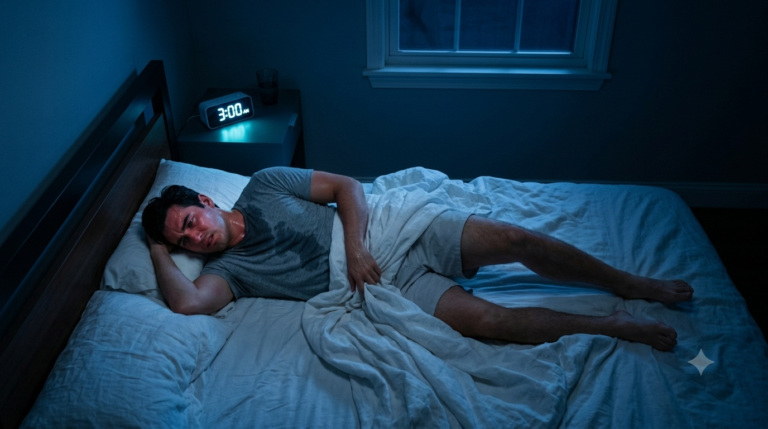
You fall asleep fine. Then, around 3am, you’re wide awake — kicking off blankets, sweating, wondering why your body does this every single night.
The 3am wake-up isn’t random. There’s a specific biological reason it happens at that exact hour. Once you understand it, the fixes become obvious.
The quick answer: Waking up hot at 3am happens because of a biological collision between two circadian events: your longest REM sleep cycle — during which your body temporarily loses its ability to regulate temperature. If your mattress or bedding is trapping ambient heat, this natural 3am biological shift will overheat your skin and jolt you awake.
The 3am Body Temperature Paradox
Your core body temperature follows a strict 24-hour rhythm. It rises through the day, peaks in the late afternoon around 98.6–99°F, then begins dropping as evening approaches — that drop is what makes you feel sleepy.
Here’s the paradox: to lower your core temperature, your body moves heat outward. It dilates blood vessels near the skin surface, flushing warm blood to your hands, feet, and face to radiate heat into the surrounding air. This is why your hands and feet feel warm when you’re falling asleep.
This process works fine — until it hits a bottleneck. If your bedding, mattress, or room temperature is trapping that heat instead of letting it dissipate, your core temperature stays elevated. Your body escalates the response. You wake up.
The question is: why 3am specifically?
Why 3am Specifically? The Biology Behind the Timing
Your Longest REM Cycle Peaks Around 3am
Sleep runs in 90-minute cycles. Each cycle contains light sleep, deep sleep, and REM (rapid eye movement) sleep. The proportion shifts as the night progresses — your deep sleep is front-loaded in the early hours, and your REM cycles get longer toward morning.
By 3am, most people are entering their third or fourth sleep cycle, and REM now dominates. During REM, something unusual happens: your thermoregulation shuts down. Your body temporarily stops actively managing its temperature and becomes sensitive to the ambient environment.
If your room is too warm, your bedding is trapping heat, or your mattress is radiating warmth back at you — REM is when you’ll feel it most acutely. You wake up overheated because your body has lost its ability to compensate.
Cortisol Begins Rising at 3am
Cortisol — your primary stress hormone — follows its own circadian rhythm. It sits at its lowest point around midnight, then begins rising around 3am as your body prepares for the demands of waking life.
Cortisol raises body temperature. The heat and the anxiety feed each other.
Metabolic Heat from Your Liver
If you eat a heavy meal or consume alcohol within 3 hours of bed, your liver is actively processing those calories mid-sleep. Alcohol is particularly disruptive: as your liver finishes metabolizing the alcohol — typically 3 to 5 hours after your last drink — your body experiences a physiological rebound. Surface blood vessels dilate, body thermoregulation failures, and your suppressed REM sleep rebounds aggressively right around 3am, hitting you with intense heat right when your thermoregulation is offline.
The 6 Most Common Causes of Waking Up Hot at 3am
- Room temperature above 68°F (20°C). The optimal sleep temperature is 65–68°F. Above that, your body can’t offload enough heat during REM. This is the most common and most fixable cause.
- Heat-trapping bedding. microfiber, polyester, and dense, high-thread-count sateen sheets all restrict airflow. Synthetic comforters are worse. Your bedding is either helping your body dissipate heat or blocking it.
- A heat-retentive mattress or pillow. Traditional memory foam absorbs and holds body heat. If your mattress or pillow is foam without gel or copper infusion, it’s radiating warmth back at you all night — the effect peaks during REM when you can’t compensate.
- Perimenopause or menopause. Estrogen regulates the hypothalamus’s temperature setpoint. As estrogen drops during perimenopause, the thermostat becomes erratic — small rises in core temperature trigger vasodilation responses (hot flashes) that are disproportionately strong. These commonly strike between 2am and 4am.
- Alcohol or a heavy meal within 3 hours of sleep. Alcohol causes immediate vasodilation (flushing), disrupts thermoregulation, suppresses REM in the first half of the night then rebounds it in the second — meaning more REM at 3am when you’ve metabolized the alcohol. A heavy meal keeps your liver metabolizing through the night.
- Elevated stress or anxiety. The result is an earlier, stronger heat response.
How to Stop Waking Up Hot at 3am
Fix the causes, not just the symptoms. These are ranked by impact:
1. Set Your Room to 65–68°F (18–20°C)
This is non-negotiable. No product fixes a room that’s too warm. If you don’t have air conditioning, a fan positioned to pull warm air out of the room (pointing outward through a window) is more effective than one blowing air at you.
If airflow is the missing piece, see our guide to the best fans for hot sleepers — the right bedroom fan drops perceived temperature 4–6°F without disrupting sleep.
2. Switch Your Sheets
Bamboo viscose and percale cotton are the two most breathable options. Bamboo wicks moisture; percale has a looser weave that allows airflow. Thread count above 400 in any material adds density and heat retention — go lower. See our researched and reviewed picks for cooling sheets.
3. Replace Your Comforter
A down-alternative or synthetic comforter that felt fine in winter will smother you during REM in summer or in a warm bedroom. Cooling comforters use phase-change materials (PCM) or arc-chill fabrics that actively absorb body heat. Our comforter guide covers the options by price and sleep style.
4. Address Your Pillow
Your head and neck are major heat-release zones. A foam pillow that retains heat turns this into a heat source instead. Shredded memory foam with gel, latex, or buckwheat all sleep cooler than solid foam. See the top-rated cooling pillows we’ve selected and reviewed.
5. Add a Cooling Mattress Topper
If replacing your mattress isn’t an option, a gel-infused foam or copper-infused topper creates a cooler sleep surface without the cost of a new mattress. This is especially effective if your current mattress is older memory foam. See our top-rated cooling mattress toppers.
6. Cut Alcohol and Heavy Meals by 9pm
Alcohol should be finished at least 3 hours before sleep. Your last meal should be light if you’re eating within 2 hours of bed. These aren’t arbitrary rules — they directly reduce the metabolic heat load your liver is managing during REM.
For a full system approach, see our complete hot sleeper solutions guide or go straight to our curated product list to build a cooling sleep setup from the ground up.
Hot Sleeping vs Night Sweats: When to See a Doctor
Hot sleeping — waking up warm and kicking off covers — is a comfort issue. Night sweats are a medical symptom. The distinction matters.
Night sweats (see a doctor):
- Sheets are soaking wet — not just damp
- Happening consistently even when your room is cool
- Accompanied by fever, unexplained weight loss, or swollen lymph nodes
- Sudden onset in men over 40 (can signal testosterone changes) or women in their 40s–50s (perimenopause)
- Associated with new medications (antidepressants, hormone treatments, and some blood pressure medications all cause night sweats)
Hot sleeping (a comfort and environment issue):
- You feel warm and wake up, but sheets are only lightly damp
- Improves when you open a window or run a fan
- Better in winter, worse in summer
- No other symptoms
If you’re unsure, see your doctor. If it’s clearly a comfort issue, it’s fixable with the right sleep environment. Earlier in the night you’re in deep (NREM) sleep, where your body is still actively managing temperature. REM removes that buffer.
Is waking up hot at 3am every night something to worry about?
If you’re waking up warm but your sheets aren’t soaked and you have no other symptoms, it’s almost certainly a sleep environment issue — not a medical one. Start with room temperature and bedding before worrying about underlying conditions.
Does alcohol make you wake up hot at night?
Yes. Alcohol causes vasodilation (immediate surface warmth), disrupts thermoregulation, and suppresses REM in the first half of the night. When your body metabolises the alcohol — usually around 3am — REM rebounds strongly. You get more REM at the worst possible time, in a state where your thermoregulation is already compromised by the alcohol.
What temperature should my bedroom be to avoid waking up hot?
65–68°F (18–20°C). This is the range most sleep researchers agree supports core temperature drop during sleep. Above 70°F, thermoregulation during REM becomes difficult for most people. Below 60°F starts to cause disruption from the opposite direction.
Can changing my bedding actually stop me waking up at 3am?
Yes — if your bedding is trapping heat. Bamboo or percale sheets, a breathable comforter, and a cooling pillow create a sleep surface that helps your body offload heat during REM instead of blocking it. Most people notice a difference on the first or second night.
If you’re also waking up soaked rather than just hot, the cause is usually your bed environment rather than the time. See: How to Stop Sweating in Bed: 8 Fixes That Work Tonight.