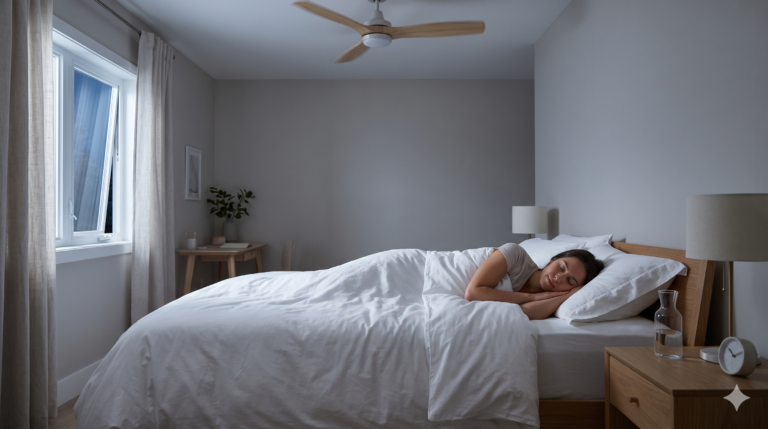
Are Bamboo Sheets Actually Cooling? What Hot Sleepers Need to Know (Bamboo vs Percale)
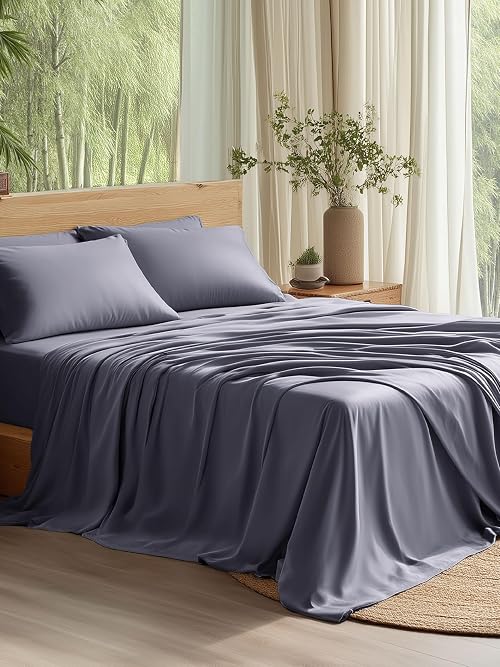
It’s 3am, and Sarah is sitting on the bathroom tiles in her underwear. Again.
See what Reddit says about which cooling sheets actually work: Best Cooling Sheets: What Reddit Actually Says (2026).
Still deciding whether bamboo is the right call for you? Start with the question behind the comparison: Are bamboo sheets actually cooling? — a breakdown of how bamboo fabric works and which sweat type it suits.
The cool floor against her legs offers two minutes of relief before the heat builds back. On her bed: a $180 set of bamboo sheets she bought three weeks ago after reading that bamboo was “the best fabric for night sweats.” They’re damp. They’ve been damp since 1am.
This isn’t a story about bad sheets. It’s a story about the wrong sheets — and why the distinction matters every night.
The Quick Answer: Bamboo viscose wicks moisture effectively, but has a finite saturation point. For moderate sweaters and radiant heat sleepers, bamboo genuinely performs as marketed. For heavy sweaters — women who wake up damp or soaked, whose sheets need changing mid-week — bamboo saturates before morning and then holds moisture against the skin, making things worse. The community-backed alternative for heavy sweaters is 100% cotton percale at 200–300 thread count, a fabric that ventilates instead of wicking, and never saturates.
September 2026 • 12 min read • Sleep & Bedding
📖 What You’ll Discover
- The Bamboo Marketing Problem Nobody Names
- Why Bamboo Fails at High Sweat Volume
- Who Bamboo Actually Works For
- What the Menopause Community Uses Instead
- The Sweat Type That Changes Everything
- The Thread Count Myth (It’s the Opposite of What You Think)
- The Brands Worth Knowing About
- What to Buy Right Now
The Bamboo Marketing Problem Nobody Names
Open any bedding website. Search “sheets for night sweats” on Amazon. Browse five articles on menopause sleep. You will find the same answer in every single one: bamboo.
The marketing is consistent. The testimonials are numerous. The star ratings are high. And for a significant percentage of women reading those reviews — women with heavy night sweats — the sheets they order will make their 3am worse, not better.
No brand will tell you this, because every brand selling bamboo has an incentive to say bamboo works for everyone. The women who return the sheets quietly buy something else. The women who keep them don’t always connect the dots between the fabric and the problem. And the review cycle continues.
One oft-shared r/Menopause thread put it bluntly: commenters argued that bamboo sheets are essentially a marketing reframe of rayon — the wicking mechanism is real, but the “bamboo” branding overstates what’s different about the fiber.
That’s too blunt, and partly wrong. But the frustration behind it is real — and the mechanism behind the failure is real. Understanding it takes about five minutes, and it will save you from buying the wrong thing.
Why Bamboo Fails at High Sweat Volume
Bamboo viscose — the fabric in virtually all “bamboo sheets” — is a wicking fiber. It draws moisture from your skin surface and spreads it across the fabric to evaporate. At low to moderate sweat volumes, this works exactly as the marketing describes. You feel dry. The sheet stays relatively cool to the touch. The moisture disappears.
The variable no brand mentions: capacity.
Every wicking fiber has a maximum moisture absorption point. Once bamboo reaches that point, it stops moving moisture away from your skin — because there is nowhere left for the moisture to go. The fiber is full. Wet bamboo then sits against your skin as a damp, sealed layer that traps body heat instead of releasing it.
The community clock on this: somewhere between 1am and 3am for heavy sweaters. Not at purchase. Not in the first hour of sleep. Hours later, when saturation is complete and the sheet that felt cool at 11pm has become the problem. (There’s a reason 3am is the most common wake-up time for women with hormonal night sweats — and it’s not random.)
Women in the r/Menopause community have documented this precisely:
“I couldn’t figure out why I disliked the sheets because they are soft to the hand touch, but not while in bed.”
one commenter noted that the sheets took forever to dry and stayed damp through the night
“I thought maybe it was just a bad night. But after a week, I realized these ‘premium’ sheets were making everything worse.”
These aren’t isolated complaints about low-quality products. They’re descriptions of a physical property of bamboo viscose at high sweat volumes. The quality of the sheets doesn’t change the saturation mechanism.
Who Bamboo Actually Works For
To say bamboo doesn’t work is wrong. To say bamboo works for everyone is also wrong.
For moderate sweaters — women who wake up damp but not soaked, whose sweating varies by night — bamboo’s wicking capacity handles the moisture volume before saturation becomes a problem. The fabric performs through the night. The cool-to-touch feel is real and sustained.
For radiant heat sleepers — women whose bodies run hot but whose sheets don’t actually get wet — bamboo’s neutral temperature feel works well. The issue isn’t moisture management; it’s heat retention. Bamboo handles this. If you’re not sure why your body runs hotter at night than it used to, the biology behind why women sleep hotter than men is worth understanding before you spend money on any new bedding.
The community confirms this split:
“I LOVE my bamboo sheets. The softest, coolest sheets I’ve ever invested in. (I was desperate!!!)”
“Best sheets I’ve ever slept on. If we go on vacation, the cotton sheets make me sweaty.”
“Bamboo doesn’t feel as crisp and fresh initially, but at 3am when I’m having my third hot flash of the night, I’m not laying in a puddle.”
These women are not wrong. They are not the same women as Sarah on the bathroom floor at 3am. The marketing treats them as identical. They aren’t.
What the Menopause Community Uses Instead
Ask the women on r/Menopause and r/Perimenopause what they switched to when bamboo stopped working. The answer arrives in the same words, across hundreds of different threads:
community members consistently pushed the same advice: go with 100% cotton and the lowest thread count available
“I’m Team 100% Linen. As much as I love good cotton, nothing compares to real linen!”
“I’m afraid to spend the money to find out when I know percale cotton works for me.”
That last one is worth pausing on. A woman who has cycled through enough sheet experiments that she won’t risk leaving what works. The fear of wasted money is now a bedding preference. That’s how many failed purchases some women have behind them.
What they’re describing — 100% cotton, low thread count — is percale. Not a fiber: a weave. A plain one-over-one-under structure that creates millions of small gaps in the fabric. Air moves through those gaps all night. The fabric does not absorb and hold moisture the way bamboo does. It ventilates rather than wicks.
For heavy sweaters, the difference is the difference between waking up saturated and sleeping through.
See our researched picks for the best cooling sheets for women with night sweats →
The Sweat Type That Changes Everything
Before you buy anything, find your category. The right fabric is not the same for all three. If you want a faster way to identify yours, take the Hot Sleeper Diagnostic — it takes 60 seconds and routes you to the right recommendation.
🔵 Heavy Sweater
You wake up damp or soaked. Sheets may need changing mid-week. You kick covers off and still feel wet.
Bamboo will saturate before morning. You need a fabric that ventilates, not one that wicks until full.
✓ Best Choice: 100% Cotton Percale, 200–300TC — or 100% Linen for maximum airflow
✗ Avoid: Bamboo viscose, TENCEL blends at high sweat volume, Microfiber, Sateen weave
🩵 Moderate Sweater
Damp but not soaked. Night sweats vary. Sheets are warm by morning but don’t need mid-week changes.
Bamboo’s wicking capacity handles your sweat volume without hitting saturation. This is the use case bamboo was made for.
✓ Best Choice: 100% Bamboo Viscose or TENCEL Lyocell
✗ Avoid: High thread count Sateen, Microfiber, Polyester blends
🟠 Radiant Heat
Body runs hot. Sheets aren’t wet. You overheat without soaking through.
The issue is heat retention, not moisture. Prioritize cool-to-touch feel and breathability.
✓ Best Choice: Bamboo Viscose or TENCEL Lyocell
✗ Avoid: Flannel, High thread count Sateen, Microfiber, anything with polyester
The Thread Count Myth (It’s the Opposite of What You Think)
Every department store trains you to equate higher thread count with better quality. For hot sleepers, this belief costs you sleep.
High thread count percale — 400 thread count and above — packs the weave so tightly that airflow is restricted. The gaps that make percale breathe start to close. The fabric that would have worked at 200TC now traps heat the same way a dense weave does.
One frustrated community member put it clearly: one commenter put it directly: thread count is a red herring — it tells you nothing useful about how the sheet will actually feel or perform
The sweet spot for cooling: 200–300TC, 100% cotton percale. Below that, some fabrics feel rough. Above 300, breathability starts to compromise. The community’s “lowest thread count you can find” is directionally correct — they mean: don’t chase numbers upward.
For bamboo, thread count is a less meaningful signal than fiber quality. Focus on 100% bamboo viscose with no polyester blending. Polyester in a bamboo blend is the single clearest quality indicator — it reduces the moisture management that makes bamboo worth buying.
What the Menopause Community Actually Uses
These brands came up organically in community threads — no brand prompts, no sponsored posts. We’re sharing what women mentioned, not making product endorsements.
For Heavy Sweaters — the percale picks:
Quince (~$150 Queen) comes up repeatedly as the percale recommendation at a fair price. Women describe it as “outstanding at a quarter of the price” of premium alternatives. Multiple mentions after bamboo failed them. Budget first: several women also mention Target and IKEA percale sets ($30–60) in the same breath as brands three times the price — the recommendation is about weave and thread count, not brand prestige.
“I’m afraid to spend the money to find out when I know percale cotton works for me.” — r/Menopause
For Moderate Sweaters — the bamboo picks:
Luxome is the most-mentioned bamboo brand by women who get results from bamboo. Cariloha bamboo twill comes up alongside it — “cool and soft and amazing” is a direct community quote. Cozy Earth (~$500) appears next to phrases like “I was desperate” and “pricy but worth it” — aspirational but with genuine community backing.
When sheets aren’t enough:
BedJet ($150–350) — an active air-cooling device, not sheets — gets multiple unprompted mentions as a “game changer” from women who’ve cycled through every fabric and stopped experimenting. Worth knowing about.
For specific products we’ve researched with current pricing and where to buy, see our full guide: Best Cooling Sheets for Women with Night Sweats →
One More Thing Worth Saying
This community has spent a lot of money solving this problem. The financial frustration runs through every thread:
one reviewer described investing in two full sets of bamboo sheets only to find themselves deeply disappointed with the result
another noted a cycle of replacing pillows rapidly due to night sweat saturation — a recurring cost that added up faster than expected
The biology is real. The sleep loss is real. The money spent is real. What’s been missing is specific, honest information about which fabric solves which problem — got generic “bamboo is best” copy written by brands who sell bamboo.
Bamboo is not a scam. It’s the wrong tool for heavy sweaters. And heavy sweaters are exactly who the marketing targets most aggressively, because they’re the most desperate to buy.
FAQ
Why do bamboo sheets make me feel clammy at night?
Because bamboo is a wicking fiber with a finite absorption capacity. Once it’s full — which happens faster at high sweat volumes — it stops moving moisture away from your skin and holds it there. The damp layer that results traps heat instead of releasing it. This is why sheets that felt cool at 11pm feel hot and wet by 3am.
Is percale better than bamboo for menopause night sweats?
For heavy sweaters, yes — significantly. Percale ventilates rather than wicks, so it never saturates regardless of how much you sweat. The r/Menopause community’s unprompted recommendation is 100% cotton percale at 200–300 thread count, not bamboo.
What thread count percale is best for hot sleepers?
200–300TC. Above 300, the weave becomes dense enough to restrict the airflow that makes percale work. The community shorthand — “the lowest thread count you can find” — is pointing you in the right direction.
Is TENCEL the same as bamboo?
No. TENCEL Lyocell is made from eucalyptus pulp using a closed-loop manufacturing process. It’s more moisture-efficient than bamboo viscose at moderate sweat volumes. But it still has a saturation limit — for heavy sweaters, percale remains the better answer.
What about linen for night sweats?
Linen is the community’s other consistent recommendation alongside percale, particularly for heavy sweaters. Most breathable natural fiber available. Texture starts crisp and softens with washing. Women who love linen tend to be emphatic: nothing compares to real linen
Should I try bamboo first or go straight to percale?
If you’re not sure of your sweat type, start with budget percale (Target or IKEA, ~$30–60). If it works, you’ve saved $150. If percale feels too crisp and you’re finding your sheets aren’t that wet, try bamboo. Don’t start with a $180 bamboo set before you know your sweat type.
Related Reading
Understanding which fabric performs best under sweat is just one piece of the puzzle. If you want to go deeper on the fiber science — including how weave structure, thread count, and fabric softener affect your sleep temperature — read our full breakdown: Why Your Sheets Are Making You Sweat More (Not Less).
- Why Your Sheets Are Making You Sweat More (Not Less)
- Why You Wake Up Sweaty (And What To Do About It)
- Best Cooling Sheets for Hot Sleepers
- Take the Sleep Heat Quiz
Once you know which sheet fabric works for your body, the next step is fixing your full sleep environment — and for hot sleepers, the biggest lever is usually the mattress surface itself. See our picks for the best cooling mattress toppers. See: How to Stop Sweating in Bed: 8 Fixes That Work Tonight.