What Is a Hot Sleeper? Meaning, Symptoms & Body Temperature Science
QUICK ANSWER
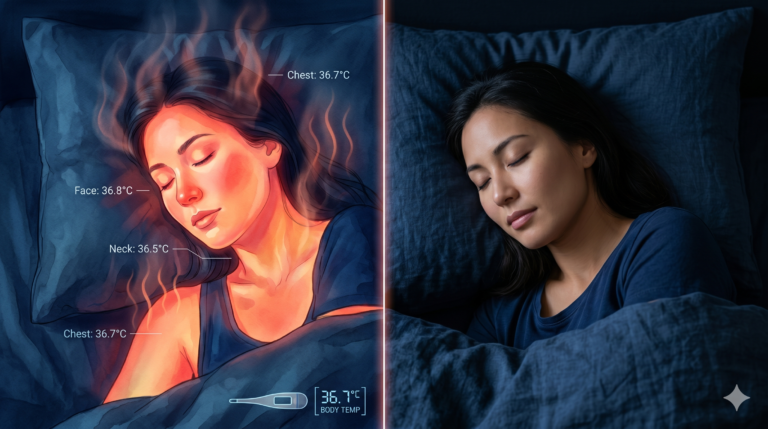
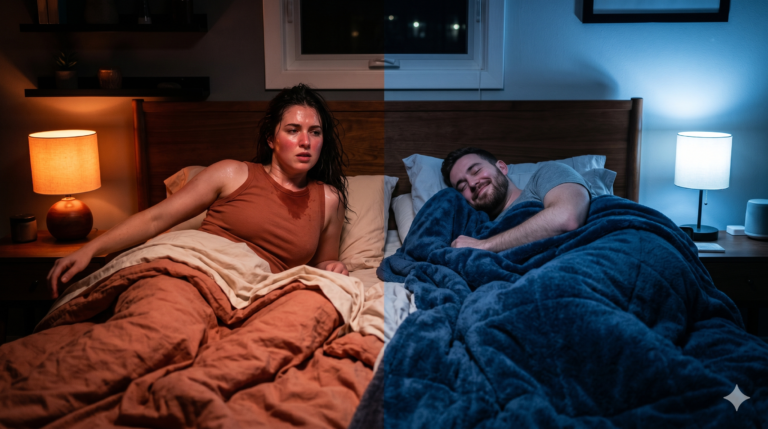
A hot sleeper is a person who consistently generates or retains excess body heat during sleep, causing them to wake up sweating, kick off covers, or feel uncomfortably warm throughout the night. Hot sleeping is not a medical diagnosis — it is a physiological trait driven by metabolism, hormones, bedding materials, and room environment. According to data from the Sleep Foundation, it affects roughly 1 in 3 adults and is more common in men, people with a higher BMI, and those experiencing hormonal changes such as menopause.
What Does “Hot Sleeper” Actually Mean?
Being a hot sleeper means your body either produces more heat than average during sleep, struggles to dissipate that heat efficiently, or both. The result is the same: you wake up warmer than you should be, often drenched in sweat, with the urge to shove your foot out from under the covers or turn on a fan at 2 AM.
The term is not a medical condition. You will not find it in a clinical diagnosis guide. But it is a well-recognized physiological pattern tied to how your body regulates its core temperature overnight — and understanding the science behind it is the first step to actually fixing it.
Common Symptoms of a Hot Sleeper
If two or more of these describe your nights on a regular basis, you are a hot sleeper:
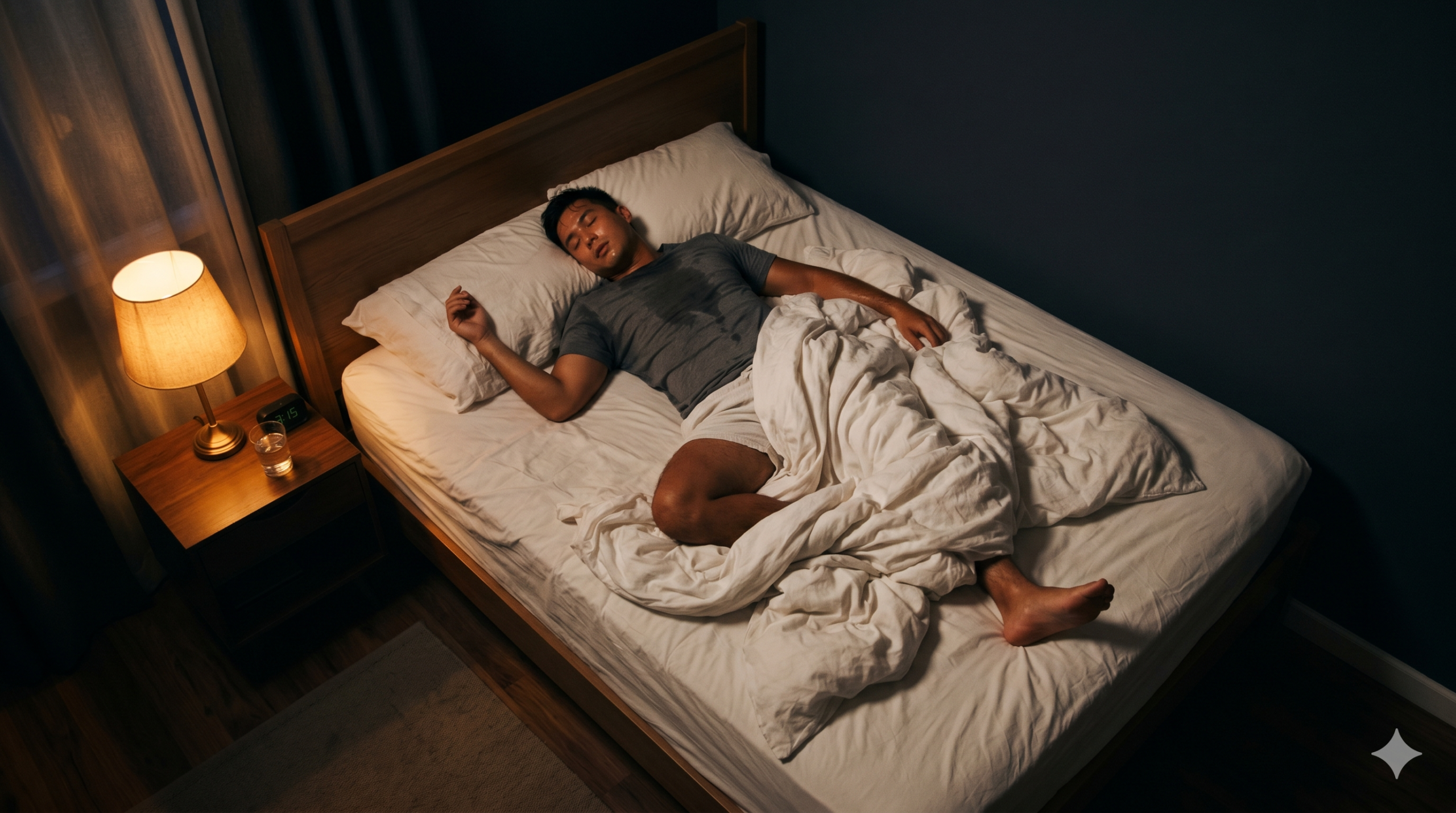
- Waking up sweating — Damp sheets, damp skin, or a need to move to a “cool spot” on the mattress during the night — a sign your sleep surface is too hot. (The fix: a cooling mattress topper.)
- The “foot out” habit — Instinctively sticking one or both feet outside the covers to cool down. This is your body trying to release heat through the skin on your feet.
- Flipping your pillow constantly — Turning the pillow to find the “cool side” every 20–30 minutes because the foam or fill has absorbed your body heat.
- Needing the fan or AC on year-round — Running a fan in January. Setting the thermostat lower than everyone else in the house. Sleeping with a window cracked in winter.
- Difficulty falling asleep in warm rooms — Taking longer than 30 minutes to fall asleep when the room is above 70°F (21°C), while others in the same room sleep fine.
- Sleeping on top of the covers — Avoiding blankets or comforters entirely, even in cooler months, because any additional layer triggers overheating.
The Body Temperature Science Behind Hot Sleeping
Your body temperature is regulated by the hypothalamus — a small structure in the brain that acts as a thermostat. Throughout the day, your core temperature fluctuates in a predictable pattern governed by your circadian rhythm:
- Late afternoon (4–6 PM): Core temperature peaks at approximately 98.9–99.3°F (37.2–37.4°C).
- Evening (9–11 PM): Temperature begins to drop as melatonin rises. This decline is what makes you feel sleepy.
- Deep sleep (1–3 AM): Core temperature reaches its lowest point — approximately 96.4–97.8°F (35.8–36.6°C). This cooling is required for restorative slow-wave sleep.
- REM sleep: Thermoregulation is partially suspended. Your body temporarily loses its ability to actively regulate temperature — a state researchers describe as transient poikilothermia — which is why the temperature of your sleeping environment matters most during REM stages.
Hot Sleeper vs Night Sweats: Key Difference
These two are frequently confused, but they have different causes and different solutions:
- Hot sleeping is environmental and physiological — driven by your body’s heat output, your room temperature, and your bedding. Fixing the environment fixes the problem.
- Night sweats are a medical symptom driven by internal factors — hormonal shifts (menopause, low testosterone), certain medications (antidepressants, blood pressure drugs), infections, or anxiety disorders. Fixing the room does not fix the underlying cause.
The practical test: if sleeping with a cooling sheet or a fan dramatically reduces your sweating, you are a hot sleeper. If you still wake drenched regardless of what the room or bedding is like, talk to a doctor — there may be a medical cause worth investigating.
What Causes Hot Sleeping?
Hot sleeping has both biological triggers (metabolism, hormones, age) and environmental triggers (mattress, room temperature, bedding materials). Most hot sleepers are dealing with a combination of both.
- High basal metabolic rate — your body produces more heat at rest
- Hormonal fluctuations — particularly estrogen and progesterone
- Thyroid overactivity (hyperthyroidism)
- Stress and elevated cortisol
- Memory foam mattresses and synthetic bedding that trap heat
- Room temperature above 68°F (20°C)
How to Fix It
Most hot sleeping is fixable without replacing your entire bedroom setup. The fix depends on the root cause, but for the majority of hot sleepers the solution is a combination of the right bedding materials and basic airflow management. See our best fans for hot sleepers guide for bedroom airflow options, our cooling mattress topper guide, and our cooling sheets guide for bedding upgrades.
Frequently Asked Questions
Is being a hot sleeper a medical condition?
No. Hot sleeping is a physiological trait, not a diagnosis. It describes how your body generates and retains heat during sleep. However, if accompanied by excessive sweating that persists regardless of room temperature, it can indicate an underlying condition such as hyperthyroidism or hormonal imbalance, which is worth discussing with a doctor.
Is it normal to sleep hot?
Yes — it is very common. The Sleep Foundation estimates approximately one in three adults regularly experience heat-related sleep disruption. It is more prevalent in men, people over 40, and those undergoing hormonal changes such as menopause or perimenopause.
What temperature should a hot sleeper keep their bedroom?
Sleep researchers consistently recommend a bedroom temperature of 65–68°F (18–20°C) for optimal sleep. Hot sleepers often benefit from pushing this slightly cooler — toward 63–65°F (17–18°C) — to offset the additional heat their bodies generate.
Can hot sleeping affect sleep quality?
Yes, significantly. Overheating during sleep reduces time spent in slow-wave (deep) sleep and REM sleep — the two most restorative stages. Chronic sleep overheating is linked to reduced sleep efficiency, more frequent nighttime awakenings, and increased next-day fatigue.
Does taking a cold shower before bed help a hot sleeper?
Paradoxically, no — or at least not in the way most people expect. A cold shower triggers your body’s cold-defense response: blood vessels near the skin constrict to protect your core organs from the perceived temperature drop. Once you step out, your body compensates by generating rebound heat, which can actually make you feel warmer 30–60 minutes later. A lukewarm shower (around 98–100°F / 37–38°C) is far more effective — it lowers skin temperature gradually without triggering the cold-defense rebound, allowing the body to dissipate heat naturally as you dry off.