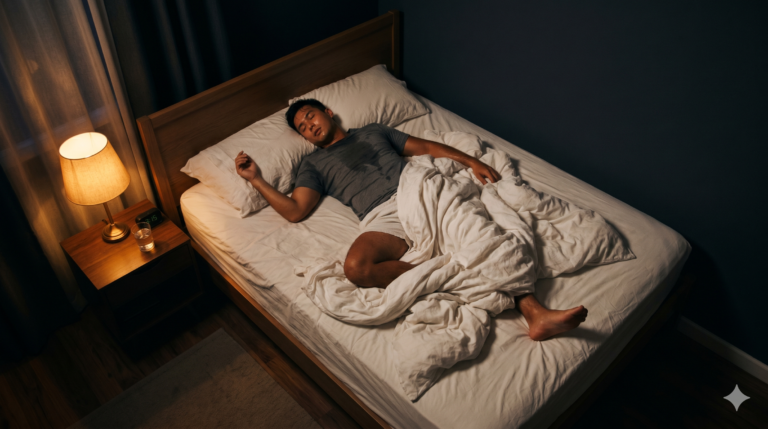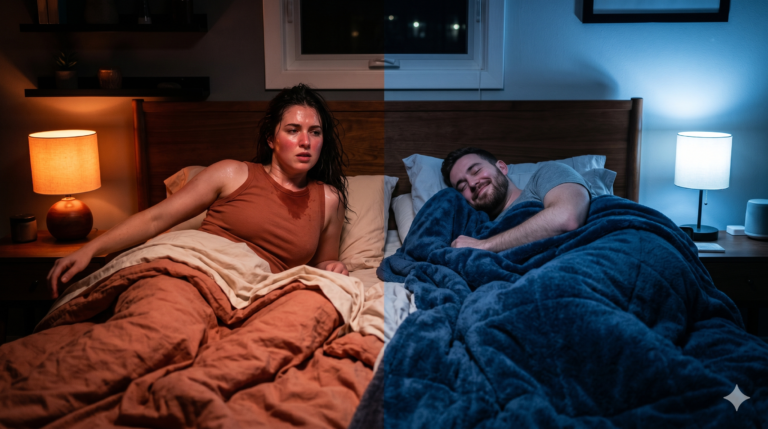
Why Am I Such a Hot Sleeper? 10 Root Causes of Nighttime Overheating
QUICK ANSWER
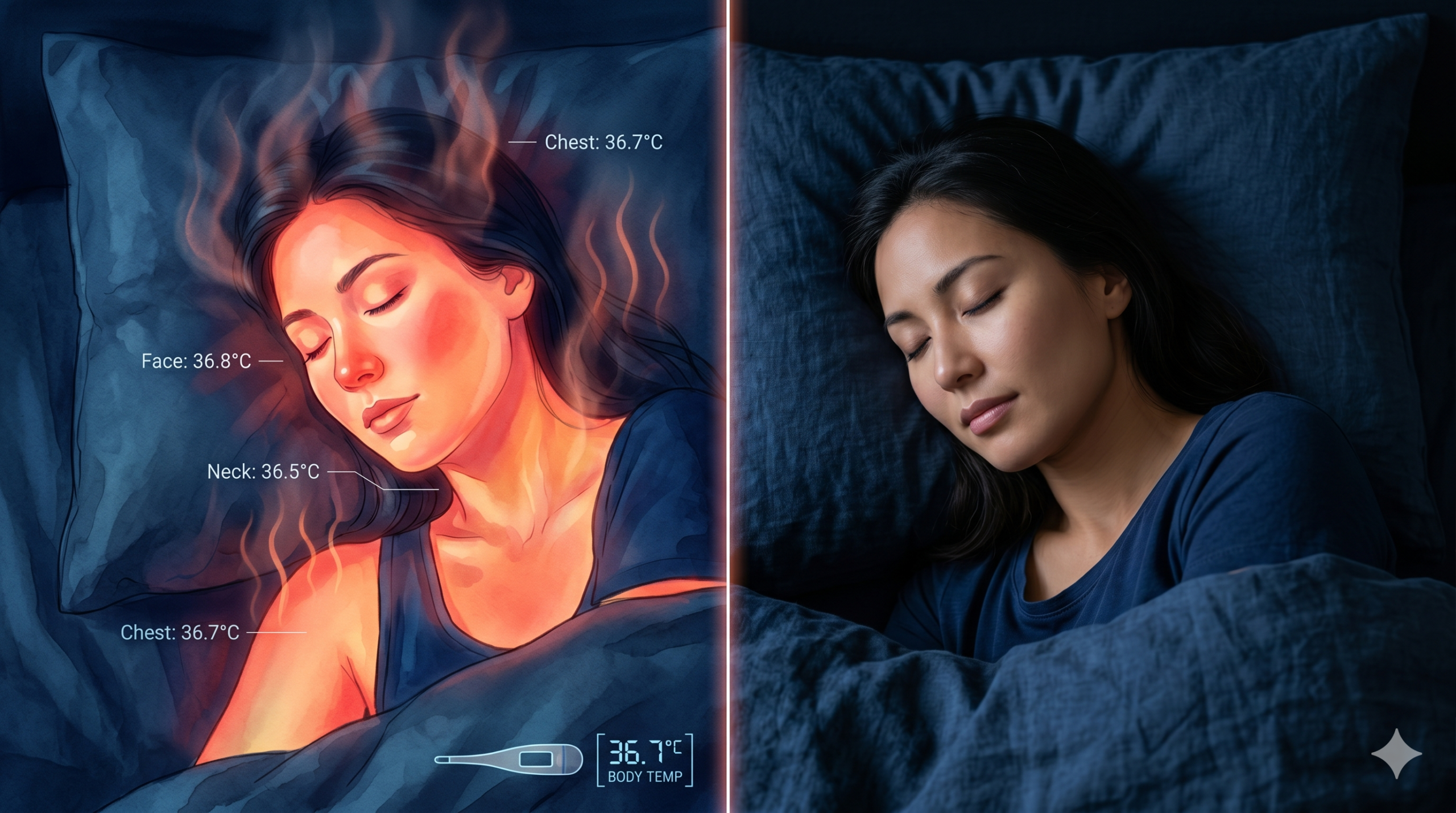
The most common reasons people sleep hot are: a naturally high metabolic rate, hormonal fluctuations (especially during menopause or the menstrual cycle), sleeping on memory foam that traps body heat, a bedroom temperature above 68°F (20°C), stress and elevated cortisol, alcohol consumption before bed, and sleeping with a partner who adds additional body heat. Most hot sleeping is fixable with the right bedding and airflow adjustments.
Why Does Sleeping Hot Matter?
Before the 10 causes: a quick word on why this is worth understanding. Hot sleeping is not just uncomfortable — it actively degrades your sleep quality. Your body needs to drop its core temperature by 1–2°F (0.5–1°C) to enter and maintain deep, restorative sleep. When your sleeping environment or internal body chemistry prevents that cooling, you spend more time in light sleep stages, wake more frequently, and get less of the slow-wave sleep that your brain and body need to recover.
Identifying your specific cause matters because the fix is different depending on the trigger. Here are the 10 most common reasons — starting with the most frequently reported.
The 10 Root Causes
-
1
Your Resting Metabolic Rate Is Naturally High
Your body produces heat as a byproduct of converting calories into energy — a process called thermogenesis. People with a higher basal metabolic rate (BMR) produce more heat at rest. Muscle mass is the biggest driver: muscle tissue burns more calories than fat tissue even when you are doing nothing, which is why men and people who exercise regularly tend to sleep hotter. This is not something you can change — but you can offset it with the right bedding and airflow.
The science: Resting metabolic rate accounts for 60–75% of total daily energy expenditure. Skeletal muscle accounts for approximately 20% of resting energy use, making it the primary driver of baseline heat production. -
2
Hormonal Fluctuations (Especially Estrogen and Progesterone)
Hormones play a direct role in thermoregulation. During the menstrual cycle, progesterone rises after ovulation and raises the body’s core temperature slightly — which is why many women sleep hotter in the second half of their cycle. During perimenopause and menopause, declining estrogen disrupts the hypothalamus’s ability to regulate temperature precisely, leading to hot flashes and night sweats. Testosterone decline in men over 40 can similarly affect sleep temperature regulation, though the effect is generally less dramatic.
The science: The thermoregulatory “neutral zone” — the temperature range in which the body does not need to sweat or shiver — narrows significantly during menopause due to reduced estrogen. Research published in Menopause journal found the neutral zone shrinks from approximately 0.9°F in premenopausal women to near zero in perimenopausal women, making temperature-triggered sweating far more likely. -
3
Your Mattress or Bedding Traps Heat
This is the most fixable cause and often the most overlooked. Traditional memory foam mattresses use a closed-cell foam structure that conforms to your body and creates a tight seal around it, trapping heat and preventing airflow. Polyester and microfiber sheets perform similarly — they are non-breathable, absorb heat, and hold it against your skin. See our guide to the best cooling mattress toppers — and what Reddit actually says about them for practical surface-level fixes.
If you are trapped on a standard memory foam bed, your two viable upgrade paths are switching to an open-cell latex foam — which allows air to circulate through the foam’s structure — or placing a Phase Change Material (PCM) topper over the mattress. PCM technology works by absorbing excess thermal energy as it crosses a threshold temperature, actively buffering the heat feedback loop between your body and the foam beneath you. This is the same technology used in high-end cooling toppers and mattresses we cover in the product guides.
The science: A 2018 study in the Journal of Chiropractic Medicine found that mattress surface temperature was a significant predictor of sleep quality and nighttime waking frequency. Memory foam surfaces consistently ran 2–3°F warmer than innerspring alternatives under identical test conditions. -
4
Your Bedroom Is Too Warm
The research is consistent: the optimal bedroom temperature for sleep is 65–68°F (18–20°C). Above 70°F (21°C), sleep quality measurably declines for most adults — with more frequent awakenings and reduced time in deep sleep. If your bedroom regularly exceeds this range — due to poor AC, an upstairs room that accumulates daytime heat, or west-facing windows — your environment is working against your body’s natural thermoregulatory process every night.
-
5
Stress and Elevated Cortisol
Stress activates the sympathetic nervous system — the “fight or flight” response — which increases heart rate, elevates blood pressure, and raises body temperature as part of the body’s arousal response. High cortisol levels at night (which occur when people are chronically stressed or anxious) interfere with the natural cortisol drop that is supposed to happen in the evening, keeping the body in a state of mild physiological alertness. This translates directly into more body heat generated during sleep.
The science: Cortisol follows a diurnal rhythm, normally reaching its lowest point between midnight and 4 AM. Chronic stress flattens this curve, maintaining higher nighttime cortisol levels that disrupt both thermoregulation and sleep architecture. -
6
Alcohol Before Bed
Alcohol is a vasodilator — it causes blood vessels near the skin surface to expand, allowing more heat to radiate outward and initially creating a feeling of warmth. While alcohol may help people fall asleep faster, it disrupts sleep architecture and suppresses REM sleep. As the liver metabolizes the alcohol (typically 3–5 hours after drinking), it generates additional metabolic heat. Night sweating after drinking is extremely common and a direct product of this process — which is why many people wake at 3 AM sweating after a night out.
-
7
Overactive Thyroid (Hyperthyroidism)
The thyroid gland controls metabolic rate through the hormones T3 (triiodothyronine) and T4 (thyroxine). When the thyroid is overactive, it produces excess thyroid hormone, which accelerates metabolism across virtually every cell in the body. This produces significantly more heat, increases heart rate, and causes excessive sweating including during sleep. Hyperthyroidism affects approximately 1.2% of the U.S. population and is more common in women.
Important: A simple TSH blood test from your doctor confirms or rules this out. This is the one cause on this list that requires medical evaluation, not a product fix.
-
8
Certain Medications
A number of commonly prescribed medications list night sweating and body temperature increase as side effects. The most significant categories: SSRIs and SNRIs (antidepressants such as sertraline, fluoxetine, venlafaxine), which affect the serotonin pathways involved in thermoregulation; hormone therapies; some calcium channel blockers used for blood pressure; and certain diabetes medications. If hot sleeping began or worsened after starting a new medication, this connection is worth raising with your prescribing physician.
-
9
Sleeping With a Partner
A sleeping partner is a radiating heat source at approximately 98.6°F (37°C). In a standard double or queen bed, the shared body heat — combined with the insulating effect of shared blankets — can raise the microclimate between two sleeping bodies by 3–5°F compared to sleeping alone. Solutions include separate duvets (the Scandinavian method), a cooling topper that creates a thermal buffer, or a dual-zone cooling system.
-
10
Age-Related Changes in Thermoregulation
As people age, the body’s ability to regulate temperature during sleep becomes less efficient. Reduced skin blood flow, declining sweat gland function, and changing hormonal profiles all contribute. Older adults are more susceptible to ambient temperature changes and take longer to adjust their body temperature in response. Research consistently shows that adults over 60 experience more sleep disturbances related to temperature than younger adults, even in identical environments.
The science: A review in Sleep Medicine Reviews found that age-related changes in thermoregulation are linked to reductions in the amplitude of the core body temperature circadian rhythm — meaning older adults both start warmer and cool down less during sleep.
Which Cause Is Yours?
Most hot sleepers are dealing with a combination — for example, a naturally higher metabolism (Cause 1) paired with a memory foam mattress (Cause 3) and a bedroom that runs warm (Cause 4). Addressing just one or two of the fixable causes is usually enough to sleep through the night comfortably. Start with the environmental causes — they are the fastest to fix and require no medical involvement.
What to Do Next
- If Causes 3 or 4 apply: Start with cooling sheets and a bedroom fan. These two changes together cost under $150 and fix the problem for most hot sleepers.
- If Cause 1 or 9 applies: A cooling mattress topper (look for PCM or open-cell latex) creates a thermal buffer between your body heat and the mattress surface.
- If Cause 2 applies: A cooling pillow addresses the most heat-sensitive contact point — your head and neck.
- If Cause 7 applies: See a doctor. A TSH blood test is quick, inexpensive, and gives you a definitive answer.
Frequently Asked Questions
Is sleeping hot a sign of a health problem?
In most cases, no. The majority of hot sleeping is driven by environmental factors and physiological traits rather than illness. However, if sweating is severe, occurs regardless of room temperature, or is accompanied by fatigue, weight loss, or heart palpitations, it is worth investigating with a doctor.
Why do I sleep hot even when the room is cold?
If you sleep hot in a cold room, the cause is most likely internal rather than environmental. The leading candidates are: a high resting metabolic rate, hormonal fluctuations (particularly around menopause or the menstrual cycle), stress-elevated cortisol, thyroid issues, or medication side effects. Look at Causes 1, 2, 5, 7, and 8 above.
Why do I wake up at 3 AM sweating?
Waking at 3 AM specifically is often linked to a natural cortisol surge in the early morning hours as the body prepares to wake up. Combined with the body’s core temperature starting to rise again after its nighttime low point, this timing coincides with the highest likelihood of a sweating episode. Alcohol metabolized 3–5 hours after drinking also produces heat at exactly this window.
Do men sleep hotter than women?
On average, yes — but the gap is smaller than commonly believed. Men typically have higher muscle mass and therefore a higher resting metabolic rate, generating more baseline body heat. However, women during perimenopause and menopause often experience far more disruptive heat-related sleep issues due to hormonal changes, making them more likely to describe themselves as hot sleepers during that life stage.
Can losing weight help me sleep cooler?
It can help at the margins. Higher body weight means more overall metabolic heat production and more physical insulation from fat tissue. However, the effect on sleep temperature is modest — improving your bedding and room environment will have a more immediate and significant impact than weight loss alone.