Hot Sleeper vs Cold Sleeper: Which One Are You? (60-Second Test)
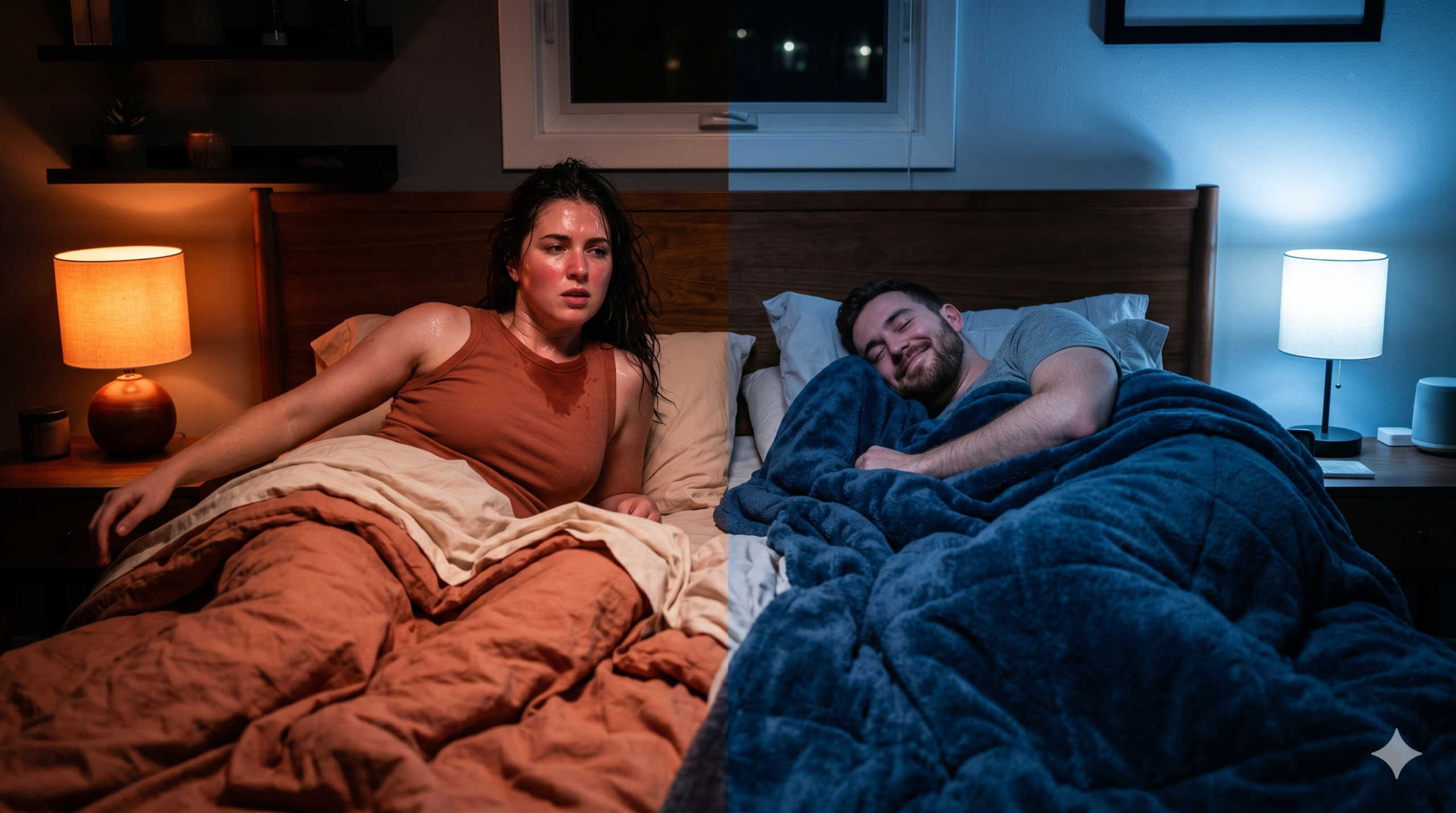
You already know which one you are. You’re either the person kicking off the covers at midnight — or the one pulling them back. But knowing the label matters more than you might think, because hot sleepers and cold sleepers have different physiological drivers, different fixes, and a very different relationship with the same bedroom thermostat.
This page covers the definition, the signs, and the biology behind why people land on each side. If you share a bed with the opposite type, the section below covers that too.
Not sure which one you are?
Take the 60-Second Sleep Heat Test
Answer 5 questions and find out whether you’re a hot sleeper, cold sleeper, or somewhere in between — with a personalized fix for your situation.
What Is a Hot Sleeper?
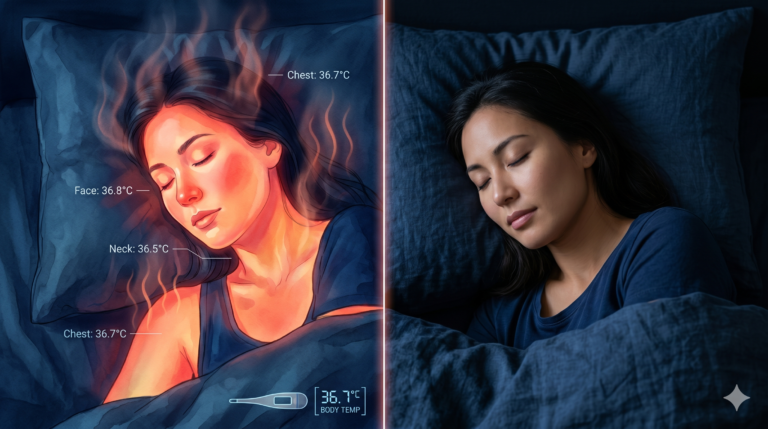
A hot sleeper runs warm at night — waking up sweating, pushing off covers, and sleeping best in a cool room between 60–67°F (15–19°C). The heat is driven by metabolic rate, body composition, hormone levels, and sometimes your mattress material. We cover the 10 most common root causes here.
One distinction worth making: not everyone who sleeps warm is a hot sleeper in the traditional sense. Some people experience night sweats — driven by hormones, medications, or underlying health factors — rather than simply running warm. The solutions overlap, but they’re not identical.
What Is a Cold Sleeper?
A cold sleeper feels chilled at night no matter the temperature, piles on blankets, and is most comfortable at 68°F or higher. Cold sleeping is typically driven by lower metabolic rate, poor peripheral circulation, or iron deficiency. It’s more common in women, particularly those with lower body weight or thyroid issues.
Signs You’re a Hot Sleeper
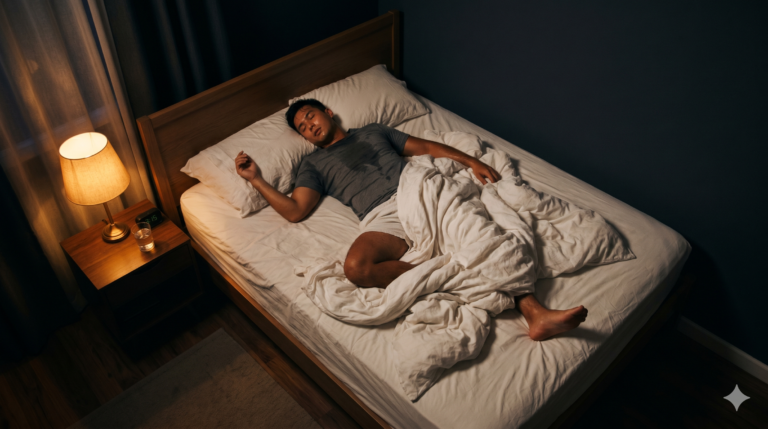
- You kick off the covers within an hour of falling asleep
- You wake up at night — particularly around 3 AM — sweating or overheated
- You sleep better in winter than summer, or with the window open
- You prefer a fan running even in cool weather
- You sleep in as little clothing as possible
- Your partner frequently complains you radiate heat
Signs You’re a Cold Sleeper
- You always need at least one layer, even in warm weather
- Your feet stay cold no matter what
- You sleep better with socks on
- You find air conditioning uncomfortable
- You feel most relaxed once fully buried under covers
- You wake up feeling cold, not warm
Why Your Temperature Type Matters for Sleep Quality
This isn’t just a comfort issue. Core body temperature is one of the primary regulators of your sleep-wake cycle. For deep, restorative sleep to begin, your core temperature needs to drop by 1–2°F. A bed environment that’s too warm actively fights that process — making it harder to fall asleep, reducing time in deep and REM sleep, and increasing nighttime waking.
For cold sleepers, being too cold also disrupts sleep — keeping the body in lighter stages and triggering micro-arousals. The 60-second quiz identifies your type and gives you the highest-impact fix for your situation.
Sharing a Bed Across the Gap — 5 Fixes That Work
A hot sleeper’s ideal room sits at 65°F. A cold sleeper’s sits at 70°F. That 5°F gap means both types sleeping in the same environment means at least one person is sleeping suboptimally — often both. The fix isn’t finding a temperature you both tolerate — it’s two separate thermal microclimates in the same bed.
- Two duvets (Scandinavian method) — each person uses their own single-sized cover. Eliminates blanket negotiation immediately.
- Set the room for the hot sleeper, let the cold sleeper layer — 65°F with an extra blanket beats 70°F where the hot sleeper has nowhere to go.
- Cooling sheets on the hot sleeper’s side only — bamboo or percale on one side, standard cotton on the other.
- A dual-zone mattress pad — each side independently temperature-controlled. Most precise solution for severe gaps.
- A fan directed at the hot sleeper’s side only — moving air drops perceived temperature 4–5°F without touching the thermostat.
Full Partner Sleeps Hot Guide →
Frequently Asked Questions
Am I a hot sleeper or a cold sleeper?
The clearest signal is what you do with covers during the night. Hot sleepers push them off; cold sleepers add layers. Hot sleepers often wake up warm or sweating around 3 AM; cold sleepers feel chilled even when the room is not cold. Take the 60-second test for a precise answer.
Can you be both a hot sleeper and a cold sleeper?
Yes — some people feel cold falling asleep but overheat by 3 AM, or run hot in summer and cold in winter. This usually points to a specific trigger (foam mattress, hormonal shift, alcohol) rather than fixed physiology.
Is being a hot or cold sleeper genetic?
Partially. Genetics influence metabolic rate and body composition. But hormones, fitness level, diet, and medications all play roles — meaning your sleep temperature preferences can shift over time. Full root cause breakdown here.
What temperature should my room be if I’m a hot sleeper?
Sleep researchers consistently point to 65–67°F (18–19°C) as optimal for hot sleepers. Above 68°F, thermoregulation during REM sleep becomes difficult. If your room won’t cool below 68°F, that’s a separate problem worth solving.
What temperature should my room be if I’m a cold sleeper?
Cold sleepers typically sleep well at 68–72°F. If sharing a bed with a hot sleeper, setting the room at 65°F and adding an extra layer is the better compromise — it’s easier to add warmth than to lose it.
Can a hot sleeper and cold sleeper share a bed comfortably?
Yes — with the right setup. Two separate thermal microclimates in the same bed, not one shared temperature. Separate duvets, per-side bedding, and a room set for the hot sleeper (cold sleeper adds layers) is the most practical framework. Full couples guide here.