
Night Sweats vs Hot Sleeper: What’s the Difference?
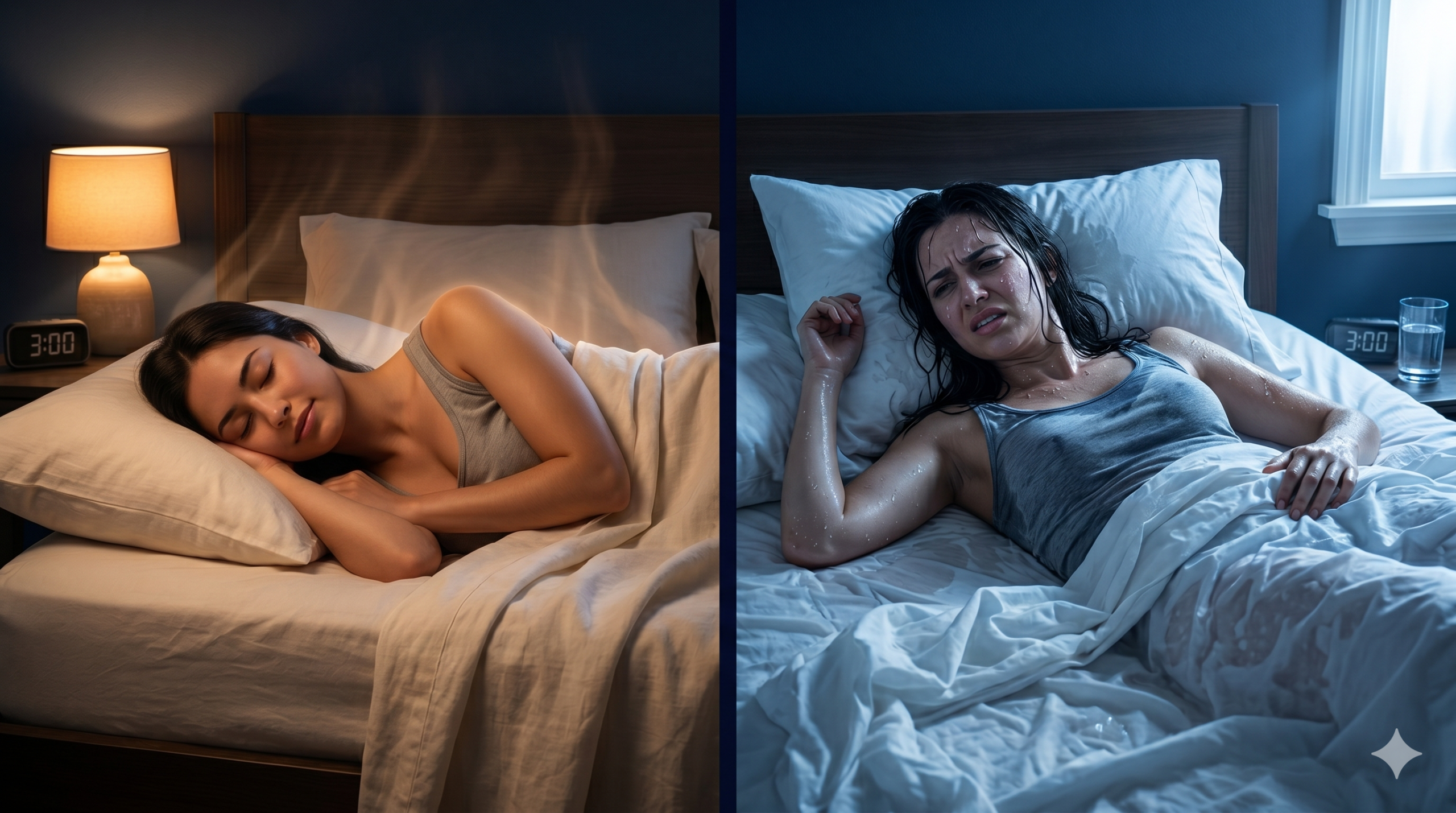
Night sweats and being a hot sleeper are not the same thing — and treating them the same way is why most people stay stuck. One is a physiological trait. The other is a medical symptom. The solutions are completely different, and in some cases one of them needs a doctor, not a new set of sheets.
Quick definition: A hot sleeper is someone whose body consistently generates excess heat during sleep, making them feel warm even in a cool environment — this is a normal physiological variation. Night sweats are episodes of heavy sweating during sleep that soak clothing or bedding, typically caused by an underlying medical or hormonal condition unrelated to room temperature.
What Is a Hot Sleeper?
A hot sleeper runs warm at night due to how their body regulates temperature during sleep. Everyone’s core body temperature drops in the first few hours of sleep — that’s a normal part of the sleep cycle — but hot sleepers either drop less, or their body generates more heat throughout the night.
The result: they kick off the covers, wake up feeling sticky, and are always the one in the relationship reaching for the fan. But they’re not sweating through their sheets. They’re just warm.
Common characteristics of a hot sleeper:
- Consistently feel too warm regardless of room temperature
- Prefer sleeping with minimal covers year-round
- Body heat is steady throughout the night — not in sudden bursts
- No drenching sweat, just warmth and mild perspiration
- Symptoms improve immediately with cooling solutions (fan, lighter sheets)
If this describes you, our full guide on what it means to be a hot sleeper covers the science in detail — including why some people consistently run hotter than others.
What Are Night Sweats?
Night sweats are a different category entirely. The defining feature is intensity: night sweats mean waking up drenched — soaked sheets, soaked clothing — regardless of whether the room is hot or cold. They’re not caused by sleeping warm. They’re caused by the body triggering its sweat response inappropriately during sleep.
According to the Mayo Clinic, night sweats are most commonly linked to:
- Hormonal changes — menopause and perimenopause are the most common cause in women; low testosterone is increasingly recognized as a cause in men
- Medications — antidepressants (especially SSRIs), hormone therapies, and some blood pressure drugs list night sweats as a side effect
- Infections — tuberculosis is classically associated with night sweats; HIV and other infections can also cause them
- Hypoglycemia — low blood sugar overnight triggers the body’s stress response, which includes sweating
- Anxiety and stress — chronic stress activates the autonomic nervous system, which can cause sweating during sleep
- Certain cancers — particularly lymphoma; night sweats combined with unexplained weight loss and fever should always be evaluated by a doctor
The critical point: cooling your bedroom or switching to moisture-wicking sheets may reduce discomfort from night sweats, but it won’t stop them. The cause is internal, not environmental.
How to Tell Which One You Have
Use this as a quick self-test:
| Question | Hot Sleeper | Night Sweats |
|---|---|---|
| Does a cooler room help? | ✅ Yes, significantly | ⚠️ Slightly reduces discomfort |
| Do you soak through clothing/sheets? | Rarely | Yes, regularly |
| Is the warmth constant or in episodes? | Constant background warmth | Sudden intense episodes |
| Does it happen even in winter/cold rooms? | Less common in cold | Yes — temperature-independent |
| Any other symptoms (fatigue, weight change)? | Usually no | Sometimes — worth flagging to a doctor |
| The “Towel Test” | Sheets dry quickly once you kick off the covers | Requires changing clothes or laying a towel down to go back to sleep |
Can You Be Both a Hot Sleeper and Have Night Sweats?
Yes — and this is where it gets confusing. Someone going through menopause, for example, may have hot flashes (night sweats) layered on top of an existing tendency to sleep warm. In that case, managing the environment helps with the background warmth, but the hormone-driven sweating episodes require separate attention.
If you’re genuinely unsure, track your symptoms for two weeks: note the room temperature, what you were wearing, and how intense the sweating was. If drenching sweats happen consistently regardless of room temperature, that’s your signal to talk to a doctor.
When to See a Doctor
Being a hot sleeper doesn’t require medical attention. Night sweats might. See a doctor if:
- Sweating is severe enough to regularly soak through bedding
- Night sweats appeared suddenly or recently changed in frequency
- You have other unexplained symptoms — weight loss, fatigue, fever, or swollen lymph nodes
- You’ve recently started a new medication
- You’re in perimenopause or suspect a hormonal shift
The Sleep Foundation notes that while night sweats are often benign, persistent or severe cases should be evaluated to rule out underlying conditions.
What Actually Helps Each One
If you’re a hot sleeper: The solution is environmental. Cooling the sleep surface and improving airflow makes a direct, immediate difference. A combination of breathable sheets, a fan positioned for airflow, and the right pillow can drop the trapped microclimate temperature beneath the covers by 8–12°F without touching your wall thermostat. See our full cooling solutions guide or go straight to our researched product picks across every category.
If you have night sweats: Address the cause first. Depending on the trigger — hormones, medication, anxiety — your doctor may recommend hormone therapy, switching medications, or treating an underlying condition. In parallel, moisture-wicking sheets and a breathable pillow cover can reduce how uncomfortable the episodes are, but they won’t stop them.
Frequently Asked Questions
Is being a hot sleeper a medical condition?
No. Being a hot sleeper is a physiological trait — a variation in how your body regulates temperature during sleep. It’s not a medical condition and doesn’t require treatment. It does, however, respond well to targeted cooling solutions like breathable bedding, better airflow, and a cooler room temperature.
What is the main difference between night sweats and hot flashes?
Hot flashes are sudden feelings of intense body heat that often occur during the day as well as night, most commonly due to hormonal changes around menopause. Night sweats are the nighttime version of this — the same hormonal mechanism causing sweating specifically during sleep. Both are distinct from simply being a hot sleeper, which involves background warmth rather than sudden intense heat episodes.
Can anxiety cause night sweats?
Yes. Anxiety activates the autonomic nervous system, which controls the body’s stress response including sweating. People with chronic anxiety or stress may experience sweating episodes during sleep that look identical to other forms of night sweats. Managing underlying anxiety — through therapy, medication, or lifestyle changes — typically reduces or eliminates anxiety-driven night sweats.
Do cooling sheets help with night sweats?
Cooling sheets can reduce the discomfort of night sweats by wicking away moisture more quickly and improving airflow. But they don’t address the underlying cause — so if hormones, medication, or an infection are driving the sweating, sheets alone won’t stop it. They’re a comfort measure, not a solution.
Why do I wake up sweating at 3am?
Waking up sweating around 3am is often linked to a natural dip in blood sugar overnight (hypoglycemia), which triggers a stress response and sweating. It can also coincide with a shift in sleep stages — your body temperature naturally begins to rise around 3:00 AM as your circadian rhythm prepares your organs for waking. If you are trapped beneath heavy, non-breathable bedding during this upward thermal swing, your body overcorrects by triggering an immediate sweat response to cool the skin. If this happens regularly and the sweating is intense, it’s worth discussing with a doctor to rule out blood sugar issues or hormonal causes. If you’re a chronic hot sleeper rather than dealing with medical night sweats, upgrading your sleep surface with the best cooling mattress toppers is one of the highest-impact changes you can make.